Profound writes new articles through its agents and publishes them to a CMS, while Adobe Brand Visibility (LLM Optimizer) fixes existing pages by deploying changes at the CDN edge or in Adobe Experience Manager, and it only partly generates content. For closing a gap with new content, Profound is the closer fit, and Adobe suits teams that mostly need to repair pages they already have. DeepSmith is a strong alternative for the same job: Content Map finds the topics where a competitor publishes and you have nothing, and the Writer produces publish-ready articles for them, with no IT setup.
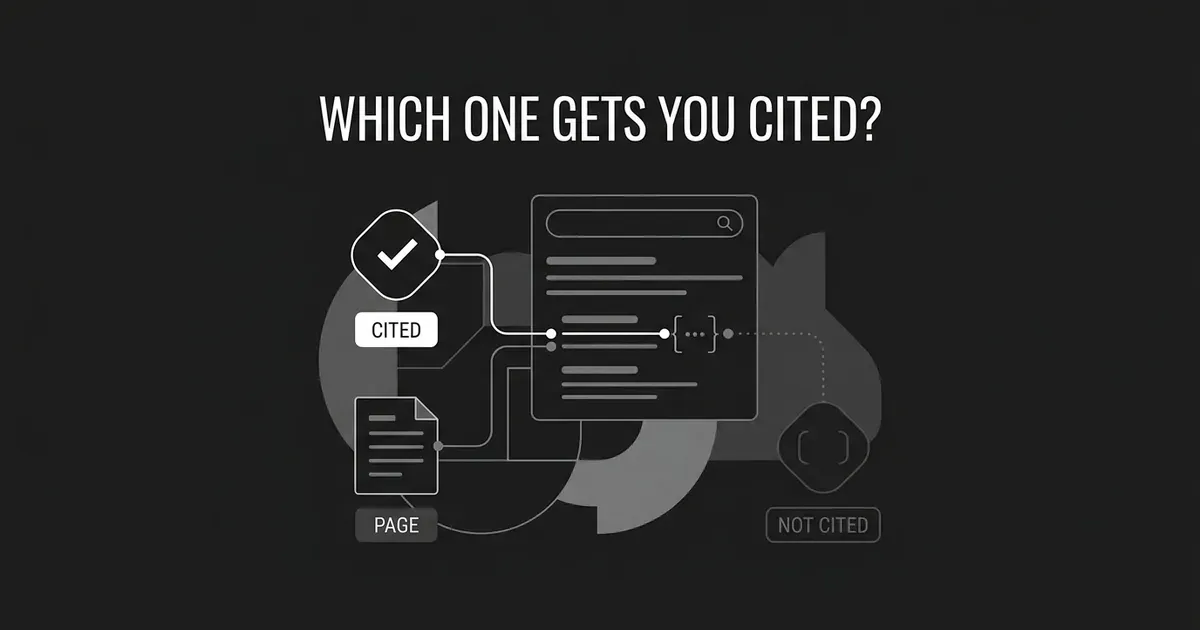
When AI answers leave your brand out, there are two kinds of fix. You can change a page that already exists so AI engines read it better, or you can publish a page that was never there. Adobe Brand Visibility leans toward the first kind and Profound toward the second. This page covers Profound vs Adobe Brand Visibility for content creation, meaning the job of turning an AI visibility gap into a published piece. DeepSmith does the second kind of fix too, and I've placed it in the comparison below. The full comparison of the two is in Profound vs Adobe Brand Visibility (LLM Optimizer): Buying Guide Outside the Adobe Stack.
Profound vs Adobe Brand Visibility for content creation: the short answer
- Choose DeepSmith if you want one self-serve plan, from $99 a month, that finds the topics you're missing, writes publish-ready articles for them, and publishes to your CMS with no IT setup.
- Choose Profound if you want agents that draft new articles from AI citation data and publish them to a CMS after approval, and you can buy a sales-led, credit-based Enterprise package.
- Choose Adobe Brand Visibility if most of your gaps sit on pages you already have, you run Adobe Experience Manager or a supported CDN, and you want fixes deployed at the edge with rollback.
| Criterion | DeepSmith | Profound | Adobe Brand Visibility |
|---|---|---|---|
| Entry price (monthly) | $99/mo (Pro) | Custom (Enterprise) | Not public (custom quote) |
| Free trial | Yes, 7 days | Yes, 7 days | Partial, existing Adobe customers only |
| Writes full articles | Yes | Yes, drafts for review | Partial |
| Brand-context grounding | Yes | Yes | Not listed |
| Publishes directly to a CMS | Yes | Yes, after approval | Partial, AEM and CDN edge |
| Rewrites or optimizes existing pages | - | Yes | Yes, CDN edge or AEM |
| Turns data into recommended actions | Yes | Yes | Yes |
| Repurposes articles into channel formats | Yes | Yes | Not listed |
| G2 rating | 4.8/5 | 4.5/5 | 3.7/5 |
Pricing and features as of September 2026, from each vendor's site and public reviews.
Profound

Profound is an AI marketing platform that tracks how answer engines mention and cite a brand, then uses agents to act on that data. For content creation, its Agents include Research-to-article and Net-New Content Creation templates that draft full articles from live citation data and brand context, and its CMS nodes publish approved drafts to WordPress, Sanity, Contentful, Webflow and others. Profound describes the output as ready for human review, with an approval step before anything goes live. The limits are cost and access. Paid pricing is not public, agent runs use credits, and most engines and several features are Enterprise only. Reviewers on G2 rate it 4.5/5 from 1,130 reviews (checked September 2026), praise the visibility and citation analytics, and some call it expensive or report a learning curve.
Adobe Brand Visibility (LLM Optimizer)

Adobe Brand Visibility is Adobe's enterprise tool for tracking brand visibility in AI answers and acting on what it finds. Adobe says it deploys optimizations at the CDN edge, served to AI agents only, or at the content source in Adobe Experience Manager, with instant rollback. Its recommendations include prioritized briefs and the blogs and pages needed to fill content gaps. Content generation is partial, since it generates content for Wikipedia, YouTube, Reddit and earned media, and writing full on-site articles is not described. The limits are access and setup. There is no public price, the only trial is for eligible existing Adobe customers, and one G2 reviewer called CDN log forwarding an onboarding barrier. G2 shows 3.7/5 from five reviews, four of them incentivized, which is too few to say much about how it does day to day.
DeepSmith: the alternative that finds the gaps and writes the articles

Both tools above have a path from a gap to a page. Adobe recommends the pages and briefs, and Profound drafts articles from citation data. What differs with DeepSmith is how that path works and what it costs. Content Map turns your site and your competitors' sites into one map of topics, and its untapped topics list shows where a competitor publishes and you have nothing at all. Opportunity Agents read that map and your AI visibility data and return content ideas, each carrying the data point that justifies it. It covers the same ground as a content gap analysis, without the spreadsheet.
The Writer then turns a planned idea into a finished, brand-grounded article, researched, linked, with a cover image and publish-ready metadata. Autowrite can do that on a set date with no one in the app, and Deep IQ stores your company, persona, voice and content type once so every article uses them. Finished articles publish to WordPress, Webflow, Strapi, Sanity or Contentful, or to your own webhooks. Setup takes minutes from your website, with no IT involved.
The pricing is published. Pro is $99 a month for 20 articles and 50 tracked prompts, Grow is $199 for 40 articles, and Scale is $399 for 90, each with a 7-day free trial and no long-term contracts. DeepSmith doesn't deploy changes to existing pages at the CDN edge. For a topic where you have no page, the thing that closes the gap is a new article, and that is what the Writer produces.


Fixing pages you already have
Adobe Brand Visibility is the stronger of the two here, because it can push an eligible fix live at the CDN edge or in Adobe Experience Manager without a content release. Adobe says edge optimizations are served to AI agents only, and its product description allows up to 1,000 optimization deployments a year. It also resolves technical issues such as blocked crawlers, missing structured data and 404s, and G2 reviewers named edge deployment and the Adobe Experience Manager integration as positives.
Profound does this work too, only by a longer route. Its agents suggest changes from a URL, and Citation Decay hands a page that is losing citations to an Agent to draft the update, which then goes through the CMS. Profound also offers Dynamic Bot Rendering for customers on CloudFront, Cloudflare or Vercel, which serves a rendered page to AI agent visits without CMS changes. Adobe's results are its own claims and the review sample is five, so I'd treat the edge route as promising and not proven for your site. A content audit for AI citations can help you decide which route a page needs. In Profound vs Adobe Brand Visibility edge optimization or new content, the edge fix is enough when the page exists and the problem is how it reads or crawls. It can't help when there is no page.
What DeepSmith does: Content Map shows per-topic depth, so you can see whether a topic is thin, top-heavy, or missing its decision-stage pages. That tells you whether a gap calls for a fix to one page or a new article beside it.
Writing new content from a gap
Profound wins this one, because it writes full articles and publishes them, and Adobe's record doesn't describe on-site article writing. Profound's Research-to-article template researches live citation data, structures the piece and drafts it, grounded in Brand Kits and Context Manager. Its own pages frame the result as a draft for human review, though it also claims publish-ready content in minutes, so expect to edit. Credits are used per run, and the cost is hard to forecast. Adobe's content generation points off-site, and its on-site output is briefs and recommendations. One G2 reviewer wanted a writing assistant.
What DeepSmith does: The Writer's output is a finished article, not a first draft to rescue, with internal and external links, a cover image and metadata already in place. A fixed monthly article allowance comes with each plan, 20 on Pro, 40 on Grow and 90 on Scale, so the cost of a batch of gap articles is known before you start.
Setup, access and pricing
On setup, Profound or Adobe Brand Visibility for content creation is a question of who has to be involved, and Profound asks less of IT for this job. Its content agents and CMS nodes work from your brand context and a CMS connection, and the CDN or log integration it needs applies to crawler analytics. It has a self-serve seven-day Trial with 50 prompts, three engines and limited credits. Paid pricing is not public. Adobe sells through a consultation, licenses a number of prompts per year, and has no public price. Its trial is for eligible Adobe Experience Manager or Adobe Analytics customers and covers 100 prompts, one domain and up to 50 URLs for one opportunity type. Crawler and referral views depend on CDN log forwarding.
Neither publishes a price I could put in a table, so a quote is the only way to compare cost. Teams weighing more enterprise options can start with the AI visibility tools for enterprise brands.
What DeepSmith does: Plans are priced openly, from $99 to $399 a month, and anyone can start the 7-day trial from the site. Your brand brief, competitors, starter prompts and first batch of ideas are populated before you pay.
From insight to action
This is close to a tie on recommendations, since both record "yes", and the two differ in what comes next. Adobe's output is a prioritized brief or a fix to deploy. Profound's is an agent-drafted piece behind an approval step. Reviewers are mixed on both. A few G2 reviewers of Adobe Brand Visibility questioned how mature some recommendations are, and some Profound reviewers want clearer, more actionable ones, though the Adobe sample is only five reviews and the Profound complaints are themes, not a count, so I wouldn't lean on either.
What DeepSmith does: One platform carries the whole loop. Tracking shows the gap, Opportunity Agents turn it into ideas that carry their evidence, New Ideas and Planned Content schedule them, the Writer produces them, and Produced Content publishes them. Every finished article also arrives with social posts already written, and the Apps Library adapts it for LinkedIn, X, newsletters and more. It's the approach covered in turning AI visibility gaps into a backlog.
Which should you choose
Choosing Profound or Adobe Brand Visibility for content creation comes down to where your gaps sit, and the list below follows that.
- DeepSmith: marketing and content teams that want to see where they're missing in AI answers and publish the articles that close those gaps, from one self-serve plan, without a sales process or IT work, for one site or several client workspaces.
- Profound: enterprise teams that want deep tracking plus agents they build and run themselves, and can buy a credit-based custom package.
- Adobe Brand Visibility: enterprises already on Adobe Experience Manager or Adobe Analytics whose gaps are mostly on existing pages, and who can involve IT for CDN and log setup.
If you're still deciding, there is a list of Profound alternatives with more tools. A second list covers Adobe LLM Optimizer alternatives for teams in the Adobe stack. For a direct look at DeepSmith vs Profound, there is a full comparison. The DeepSmith vs Adobe LLM Optimizer page does the same for Adobe.
You can try DeepSmith free for 7 days and see which topics your competitors cover that you don't. Start your free trial.