You typed your own category into ChatGPT last week. You watched it name three competitors and skip you entirely. That sting, the quiet feeling that AI recommends competitors not me, is where a lot of good marketers are living right now. Take a breath. This is fixable, and it is more mechanical than it feels.
Here is the part that should lower your blood pressure. AI engines do not pick winners by brand size, budget, or how long you have been around. They pick by source type and structure. Change what AI can find about you and how it is shaped, and you start showing up. That is the whole game.
The urgency is real, though. More than half of B2B software buyers now start their research with an AI chatbot, and most say a vendor recommended by AI earns a better first impression. If AI is the first stop and you are not in the answer, you are not on the shortlist. So let's answer the question you keep asking yourself, "why AI doesn't recommend my product," and fix it one step at a time.
Quick reframe before we start. AI product recommendations are not a popularity contest. They are a retrieval problem. The engine reaches for the sources it trusts, lifts the passages that are cleanly structured, and assembles an answer. Your job is to be one of those sources, in that shape. That is doable, and most of it is work you already know how to do.
This is the cross-segment method. The playbooks for specific worlds like SaaS, ecommerce, local, and agencies build on top of these same moves.
Map the buyer prompts that actually matter
Start with the questions your buyers really ask. Not "what is AI search," but the commercial ones: "best project management tool for agencies," "Tool A vs Tool B for small teams." Those are the prompts where recommendations happen.
Pull them from real places. Sales call notes. Support tickets. The "compare to" widgets on review sites. Reddit threads in your niche. Your own site search. Write each one down.
You are done with this step when you have 20 to 50 prompts, sorted by buyer stage and product cluster. That is your target list, the surface you are going to win. Split it into two buckets you can work on separately: the "best X" recommendation prompts and the "X vs Y" head-to-head prompts. They get answered differently, and you will build for each in a moment.
Where people go wrong here is chasing vanity prompts. Tracking "what is content marketing" feels productive, but nobody buys from that answer. If you want to get cited in best X prompts, your list has to be full of commercial, decision-stage questions. Those are the exact prompts where AI product recommendations get made, so those are the ones worth your attention.
This is one place DeepSmith does the heavy lifting for you. Its Discover Prompts feature generates a starter set from your product, persona, and buyer-stage context, so you are not staring at a blank page. From there, the Prompts view tracks each one over time with per-prompt mention and citation rates. You get the list and the scoreboard in the same place.
See who AI cites today, on every engine
Now play the answer back to yourself. Run each prompt on ChatGPT, Perplexity, Gemini, Claude, and Google AI Mode. For each one, note whether the engine names you, names a competitor, or skips you. Then note the exact URLs it cited. Those URLs are your treasure map.
This is also where the vague feeling that AI recommends competitors not me turns into something you can act on. Once you can see the specific pages winning each prompt, the problem stops being "AI hates us" and becomes "we need this kind of page, on this kind of source." That is a much easier problem to solve.
You are done when you have a baseline for every prompt, on every engine, with the cited pages logged next to each competitor. Now you know who is winning and what page is doing it.
Two traps live here. The first is the one-off check. You look once, feel bad, and move on. Without a repeatable cadence you can never tell if your work moved the number. The second is testing only ChatGPT. Only about 11% of cited domains overlap between ChatGPT and Perplexity, so a single-engine view gives you a false picture of where you stand.
Pro tip: treat your prompt set like a financial watchlist. Run the same probes, on the same engines, on the same schedule, weekly is a good rhythm. The drift over time tells you more than any single snapshot ever will.
Audit your review and third-party footprint
Here is a truth that changes everything. Your blog is not what AI cites most. Earned media and third-party sources make up the large majority of what AI engines pull from, while brand-owned sites are a small slice. So before you write a word, look at your presence on the surfaces AI trusts.
Count your reviews on G2, Capterra, and TrustRadius. Note the average rating and how recent the last review is. A useful benchmark is 50 or more reviews at a 4.0-plus average on G2 and Capterra. Then check your footprint on Reddit and Quora, and list the publications that have covered you.
You are done when you know your exact review counts, your rating, your gap to that benchmark, and which third-party surfaces mention you at all.
The common mistake is treating review profiles like a checkbox. AI cites review platforms as validation, so a thin, half-filled profile does not get pulled. Fill in your categories, add screenshots, populate the comparison data, list your alternate names. A complete profile is a citable profile.
Build the comparison and best-X pages AI wants to cite
This is where a lot of the winning happens. Comparison pages earn the single largest share of AI citations of any content type, more than a third across engines. If you want to show up in X vs Y AI answers, and to get cited in best X prompts alongside them, you need pages built the way engines like to read them. The good news is that the format is well understood, so you are not guessing at what to make.
Ship one "X vs Y" page for each of your top five competitors, plus one three-way comparison for your most contested cluster. Add one "best X" listicle per product area where you have real review presence to back it up.
Now build each one the way AI reads. Put the verdict at the top, in the first 200 words, not buried at the bottom. Add a quick comparison table early. Use real HTML tables, which get cited far more than images of tables. Compare on the same dimensions in the same order for both sides: pricing, features, ease of use, support, limitations. Use numbered pros and cons, not paragraphs. Close with a clear "who should pick what."
You are done when each page passes the bottom-line-up-front test, has a real comparison table, and ends with a specific recommendation. Build these well and you start to show up in X vs Y AI answers for the exact matchups your buyers are typing, instead of watching a rival own them.
Here is the mistake that quietly kills these pages. You write a "comparison" that is really your product page with one polite paragraph about the competitor at the end. AI ignores that. Even-handed depth wins. Give the other side a fair, specific treatment, because the engine is looking for balance, not a sales pitch.
This is the second place DeepSmith carries real weight. Its Writer turns a planned idea into a finished, brand-grounded article, researched, linked, and formatted the way AI likes, with publish-ready metadata. Deep IQ stores your brand voice and product facts, so every comparison sounds like you and never invents a claim. And because it works off your sitemap, internal links get placed for you. You are producing citation-shaped pages without hand-building each one.
Earn the off-site signals: PR, community, earned media
Remember, most of what AI cites is not yours. The bulk of AI citations trace back to earned, PR-driven content, so this is not optional work. It is the majority of the game.
Chase placements in the publications your buyers already read and AI already cites: business and trade outlets, industry blogs, research write-ups. One strong placement in a respected publication can pull more weight than a stack of blog posts. Original research is your best bait here, because it earns links and quotes naturally.
Then get real in the communities where buyers ask honest questions. Reddit and Quora are cited heavily, and they favor authenticity. Specific product names, real pricing context, and genuine use-case detail get picked up. Corporate brand-account replies get ignored.
You are done when you have a steady rhythm: a monthly cadence of earned placements, a stream of new reviews coming in, and a handful of substantive community contributions live and visible.
Where people go wrong is treating Reddit like a link-drop channel. Promotional drops get flagged and ignored. Show up as a person who knows the space, answer the actual question, and mention your product only where it genuinely fits.
A small note on Wikipedia, since people always ask. ChatGPT leans on it heavily, so it is a real citation source. It is not a target for most brands, though, because the notability and conflict-of-interest rules are strict and you should never write your own page. Treat it as a place AI pulls from, not a task on your list.
One more surface worth a look if you sell products directly: the structured product feed. Some engines now run dedicated shopping answers off submitted feeds, and inclusion is opt-in, not automatic. If that fits your business, get your feed in. If it does not, skip it and put the energy into reviews and comparison pages instead.
Make your pages machine-readable
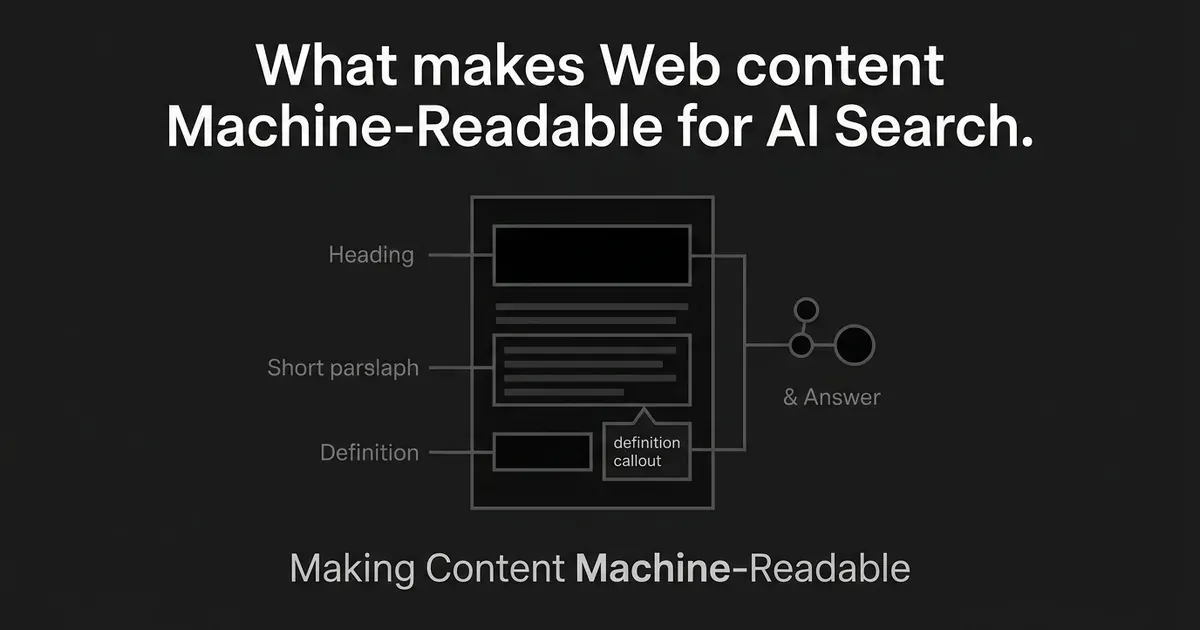
You can write the best comparison page on the internet, and AI can still miss it if the structure is not readable. This step is plumbing, and it matters more than it sounds.
Add schema to every product, comparison, listicle, and FAQ page: Product, Offer, AggregateRating, Article, FAQ, and ItemList where they apply. Structured data gives a real selection boost, and pages using several schema types get cited more often than pages using none. Add a sameAs array so engines can connect your entity across LinkedIn, Crunchbase, your review profiles, and the rest of the web.
Then check the doors are open. Look at your robots.txt and confirm you are not blocking the main AI crawlers. This is the quiet killer.
Common mistake: leaving the default "block AI bots" toggle on from your CDN, then wondering why you never appear. AI crawlers do not knock twice. Block them, and you are simply gone from the answer. Open the door first, then everything else you do can actually work.
You are done when your key pages parse cleanly in a structured-data validator and your robots.txt welcomes the main AI crawlers.
Refresh your top pages every 30 days
Publishing is not the finish line. It is the starting line. Content refreshed within the last 30 days gets cited meaningfully more often than pages that have gone stale, so a great "best X" page from six months ago is quietly losing ground right now.
Set a simple cadence. Every month, revisit your top comparison and best-X pages. Update the data, swap in newer quotes, correct any pricing, and change the visible "last updated" date. When a competitor changes their product or price, update the page that compares against them.
You are done when your top pages all carry fresh dates and reference current numbers, and new reviews get folded in within a week of going live.
The mistake here is treating a page as finished the day it publishes. Freshness is a ranking signal for AI, and a page nobody has touched in months reads as stale even if the advice is still good. A light monthly pass keeps your best work in the answer.
Measure, iterate, and expand
Now close the loop. Track mention rate, citation rate, and share of voice for each prompt on each engine, and watch the trend over time. Re-run your probes on the same cadence. As buyers ask new questions and new competitors appear, add prompts and add pages.
You are done when you have a monthly view of movement: mention rate up, citation rate climbing, share of voice gaining on a specific rival, and a clear backlog of new pages to build.
The trap is buying a tracker and never producing content, or producing content and never tracking it. Measurement without production is awareness with no action. Production without measurement means you can never tell what worked. You need both halves.
This is the third place DeepSmith does the work for you. Its AI visibility Overview reports mention rate, citation rate, and share of voice with a per-platform breakdown and a competitor leaderboard. Competitor citations shows the exact pages winning your prompts and how each rival performs by engine. And its competitor tracking flags what those rivals publish as it ships, so your next page is always informed by what is actually working in your space. Track and produce from the same data, in one place.
What to do next
If this feels like a lot, that is normal, and you do not have to do all of it this week. Pick the one lever with the biggest gap. For most teams, that is the review footprint: getting your G2 and Capterra profiles complete and past 50 reviews at a 4.0-plus rating. It is one of the most-cited signals, and it is usually the gap you can close fastest.
Then work down the list at a pace you can sustain. Map your prompts, see who wins them, build the comparison pages, open your crawler doors, and refresh on a rhythm. Momentum matters more than perfection here.
You do not need a bigger team to do this. You need a system that produces citation-shaped content and shows you where you stand. If you want to see your real gaps and start closing them with on-brand pages, you can start a DeepSmith free trial and work from live data on day one.