Your buyers stopped typing keywords. They ask full questions now, out loud to an assistant or in a chat box, and then they follow up. That shift breaks the old keyword playbook, and it is why so many teams feel invisible in AI answers even though they rank fine on Google. The good news: understanding how people ask AI questions is a learnable skill, and by the end of this guide you will have a tracked prompt portfolio wired to content that AI engines can actually cite. Let's build it one step at a time.
Why conversational prompts are a different problem
Here is what changed. A keyword is three words and no context. A conversational prompt is a full sentence stuffed with everything the buyer cares about: their team size, their budget, the tool they already use, the outcome they want. The unit of optimization moved from the keyword to the whole question, and that question carries far more signal.
The numbers back this up. ChatGPT passed 700 million weekly active users in 2025, and practical guidance is the single largest thing people ask it for, more than a quarter of all conversations. Between 15 and 20 percent of informational queries now get resolved inside an AI surface instead of a traditional results page. Roughly one in four Google searches triggers an AI Overview.
The phrasing matters too. Long-tail phrases of four or more words trigger AI Overviews at about twice the rate of one or two word head terms. Pages built for those longer phrases convert at 2.5 times the rate of head-term pages. Voice makes prompts longer still: the average voice query runs seven to ten words, and about a fifth of them hit 25 words or more. So when you optimize for long-tail AI prompts, you are meeting buyers where they already are.
If that feels like a lot to rewire, take a breath. You do not need a new content team. You need to see the conversational prompts AI search engines actually receive, then aim your existing content at them.
What people actually ask AI about your category
Real buyer questions look nothing like your keyword list. They cluster into six recognizable shapes, and a healthy tracked portfolio covers all six.
- Category discovery. "What is the best note-taking app for a UX researcher running 20 interviews a month?"
- Comparison. "Notion vs Obsidian for a small content team that needs publishing workflows."
- Use-case specific. "Best payroll tool for a 50-person remote company already using Rippling."
- Decision or validation. "Is Notion worth it for a team of 8 that has outgrown Google Docs?"
- How-to or implementation. "How do I set up abandoned-cart flows in Klaviyo without a developer?"
- Alternative or switch. "Alternatives to Mailchimp for a creator with 90K subscribers who hates the new UI."
Notice the pattern. Every one of these encodes persona, scale, stack, budget, and intent. Each of those becomes a slot the answer engine uses when it picks who to cite. Discovery and use-case prompts sit at the top of the funnel, comparison and decision prompts in the middle, how-to and alternative prompts at the bottom where purchase intent is highest. You can hear the difference in the words too: pronouns like "my team," comparators like "vs" and "instead of," constraint words like "under" and "without." Those are the fingerprints of a real prompt.
Now, the nine steps.
Step 1: Mine real buyer language from channels you already have
Start where your buyers already talk. Pull your sales call transcripts, support tickets, sales-email replies, win/loss interviews, and on-site search logs. Highlight every full-sentence question: every "how do I," every "what's the best," every "is it worth." Then mine the public surfaces where your category shows up out loud: Reddit, Quora, niche Slack and Discord groups, G2 reviews, YouTube comments, Amazon reviews.
To calibrate your ear, here is what real category language sounds like. In marketing software it reads like "What's the best AEO platform for a 3-person content team running B2B SaaS?" or "How do I get my brand cited in ChatGPT answers without paying for ads?" In services it is "Which SEO agency actually does AEO and not just link building?" In procurement it is "Is this vendor SOC 2 Type II, and how does their EU data residency actually work?" Notice how none of those are keywords. They are decisions in progress. Learning how people ask AI questions in your specific category is the whole point of this step.
You are done with this step when you have a raw list of 100 to 300 buyer-language prompts, each at least one full sentence, loosely grouped by intent.
Here is the mistake almost everyone makes. They start from their own product taxonomy and reverse-engineer the prompts. That gives you your vocabulary, not your buyer's. Their words are what the AI matched against, so their words are the ones that matter.
Step 2: Cluster into a finite tracked prompt portfolio
That raw list is messy, and that is fine. Now bucket every prompt into one of the six shapes from earlier. For each shape, keep the 5 to 20 highest-intent examples. Cap the whole thing at a number your team can actually revisit, somewhere around 50 to 200 prompts total. This is where sourcing and prioritizing your prompts turns a pile of questions into a strategy you can measure.
You are done when every tracked prompt maps to one of the six shapes, has a named owner, and sits on a recurring review.
The trap here is volume. Tracking 1,000 prompts nobody ever reads feels productive and accomplishes nothing. A small portfolio you review every week beats a sprawling one you ignore. Momentum matters more than completeness.
Step 3: Fill the gaps with a discovery tool
Your manual mining will miss things, and that is expected. A prompt-discovery tool surfaces the questions you did not think to look for. This is one place where DeepSmith does real work: Discover Prompts generates a starter set from your product, persona, and buyer-stage context, and it flags the prompts where an AI engine currently cites a competitor instead of you. That competitor signal is gold, because it tells you exactly where you are losing.
You are done when every tracked prompt has a current baseline: which brands get named, which sources get cited, and what share each competitor holds.
Watch out for one thing. Discovery output is a candidate pool, not a finished list. The tool proposes; Steps 1 and 2 decide what earns a slot. Do not let a machine bloat the portfolio you just worked to keep lean.
Step 4: Match content formats to prompt shapes
Different prompt shapes are won by different page types. One giant pillar page will not win all six, so map each shape to the format that fits it.
- Category discovery wins with a pillar comparison or roundup that has clear ranking criteria and a stated methodology.
- Comparison wins with a dedicated "A vs B for this scenario" page, feature table included.
- Use-case specific wins with a persona or industry landing page.
- Decision or validation wins with an honest pros and cons page or a customer story with named metrics.
- How-to or implementation wins with a numbered walkthrough, troubleshooting, and an FAQ.
- Alternative or switch wins with an alternatives page or a migration guide.
You are done when every tracked prompt maps to at least one existing or planned page.
The common mistake is assuming one long article covers everything. It does not. Different questions live in different architectures, and the answer engine knows the difference even when we forget it.
Step 5: Write each piece for AI extractability
This is the step that separates content that ranks from content that gets cited. AI extraction measures the page differently than a human reader does, so write for the machine's unit of measurement.
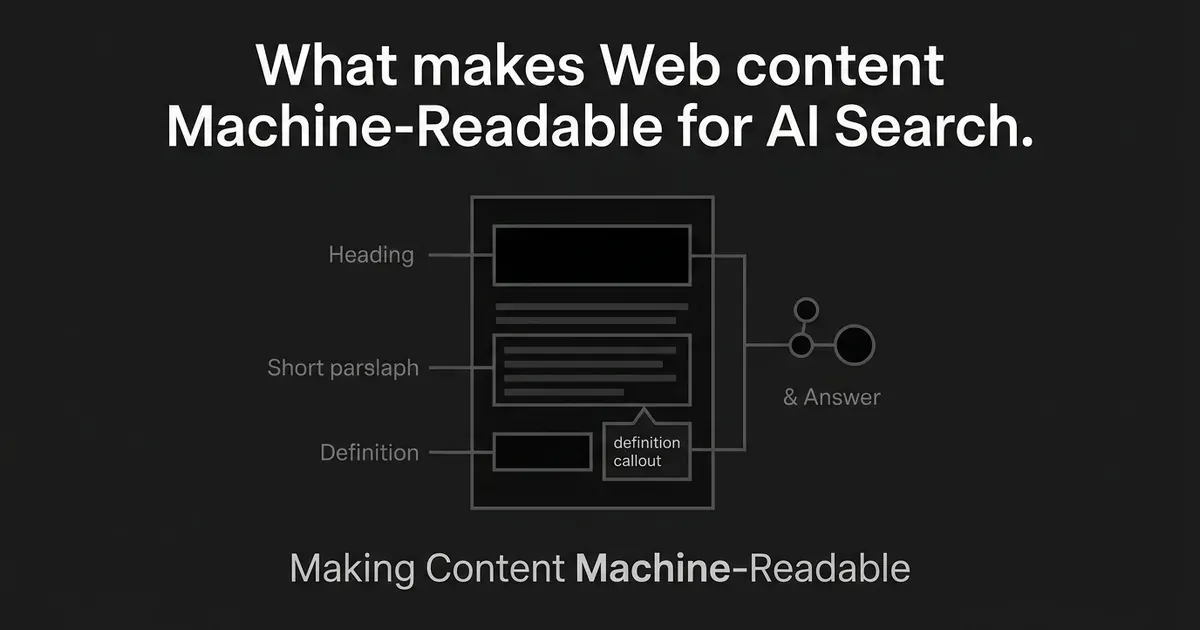
- Lead every section with a direct one to three sentence answer to that section's heading. Engines lift the first declarative block under a heading most reliably, so a buried answer gets skipped.
- Make each heading a self-contained question or statement that works without the surrounding context.
- Add the right structured data: FAQPage schema for Q&A, HowTo schema for walkthroughs, plus Organization, Product, and Article schema across the site.
- Include an author byline with credentials and a visible "last updated" date. Both nudge citation rate upward.
- Trade vague phrasing for specifics. "Many tools" becomes "11 platforms." "Recently" becomes "March 2026."
- Use tables and lists for comparisons instead of dense prose.
Why does specificity matter this much? Because long-tail AI prompts arrive loaded with constraints, and an engine matches those constraints against the concrete details on your page. A page that says "starts at $99 per month for five seats" answers a budget-shaped prompt; a page that says "affordable pricing" answers nothing. The more precise your page, the more prompts it can satisfy.
You are done when each page passes one test: does the first sentence after every heading answer that heading without scrolling?
The mistake to avoid is optimizing purely for human reading flow and hoping the AI figures out the rest. It will not. Answer-first structure is what makes your content extractable.
Step 6: Build for the multi-turn thread
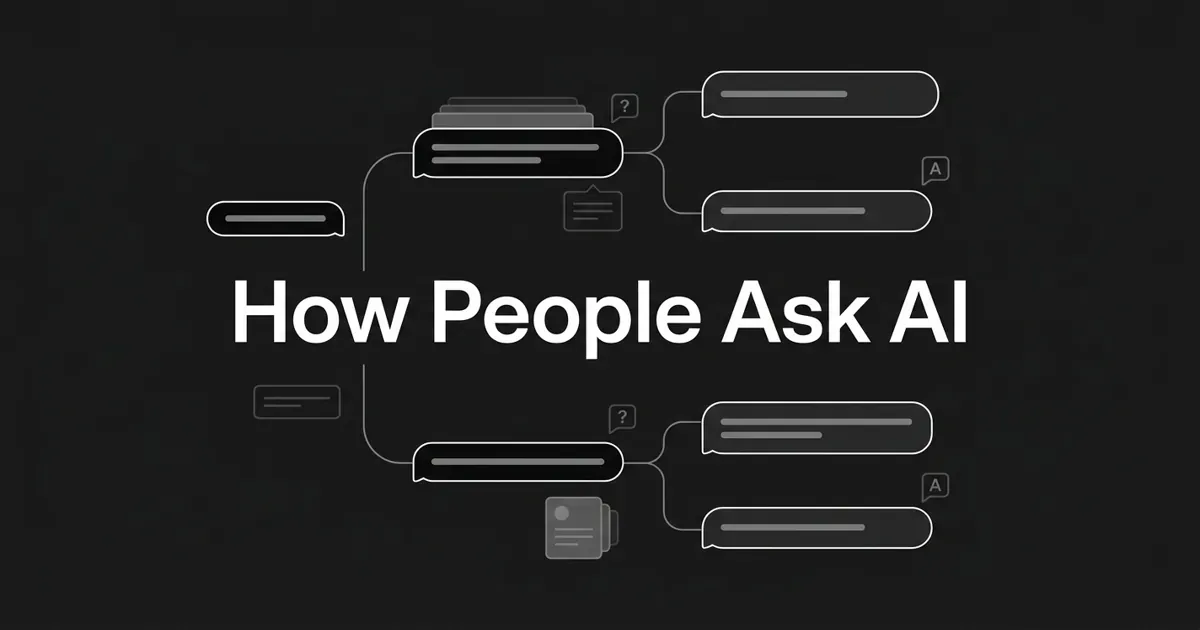
Here is the part most AEO advice skips entirely. The first prompt is rarely the last one. Buyers refine, narrow, and pivot as they learn what the model can answer, and the interesting decisions happen on turn two, not turn one.
This is not a hunch. A multi-turn benchmark tested leading models across more than 200,000 simulated conversations and found average performance dropped 39 percent from single-turn to multi-turn. Models make early assumptions and stop correcting them, and they lean on earlier turns instead of re-reading later ones. Most healthy buyer conversations cluster at two to four turns, so that is the surface worth designing for. These are the multi-turn AI queries AEO plans usually leave on the table.
So for every tracked prompt, anticipate the next two or three questions the buyer will ask, and answer them on the same page or one click away. Add modules for pricing tiers, integration lists, and migration checklists, the exact content an engine can lift into a later turn. Then interlink the thread so discovery, comparison, how-to, and alternatives pages are each one hop apart. In conversational search, the thread is the asset, not any single page.
You are done when each pillar page links to at least three follow-up pages a buyer would naturally ask about next.
Step 7: Measure share of voice, not rank
Stop chasing a single position. AI engines do not rank a fixed list the way a search results page does; citation happens per response and shifts by prompt. So the thing to measure is your visibility across the whole portfolio.
Track four metrics for every prompt on every engine you care about:
- Mention rate: how often the AI names your brand.
- Citation rate: how often it links your page as a source.
- Share of voice: your mentions and citations divided by the total across every brand for that prompt set.
- Visibility trend: how those numbers move period over period.
This is the second place DeepSmith does the work: it reports all four, per prompt and per engine, with the full answer history so you can see exactly what changed. Benchmarking your share of voice against competitors is what turns tracking into decisions.
You are done when, every week, you can name which prompts gained or lost share, which pages got newly cited, and which competitors moved.
One reassuring thing about this data: it is directional, not a scoreboard you refresh every hour. A single snapshot can mislead, because citation varies from response to response. What matters is the trend across a few weeks. So check in on a steady cadence, watch the direction of travel, and let one bad reading go.
The mistake is treating an AI engine like a Google SERP and hunting for rank number one. The unit here is the prompt, not the position.
Step 8: Close gaps by upgrading pages before writing new ones
When your share-of-voice data shows a prompt where competitors get cited and you do not, resist the urge to write a brand-new post. First audit the page that should already be winning it. Reformat it to the extractable structure from Step 5: answer-first headings, schema, an author byline, a fresh "last updated" date, and specific named entities. Then refresh the publish date. Only commission something new when no existing page can credibly own the prompt.
You are done when every "competitor cited, us not" gap has a documented decision: rewrite this page or commission a new one, with an owner and a date.
The default mistake is "let's write another blog post." Most prompt gaps close faster by improving a page that already carries some authority. You are usually closer than you think.
Step 9: Refresh and recalibrate quarterly
Buyer language is not static. Product launches, competitor moves, and platform changes all reshape how people phrase their questions, so a six-month-old prompt list is already drifting out of date. Once a quarter, re-run your discovery pass, add the newly surfaced high-intent prompts, and archive the ones that no longer show up in real buyer language. Re-baseline your share of voice, and refresh dated facts like pricing and integrations on every tracked page.
You are done when there is a recurring quarterly review on the marketing calendar, with named owners and a written output.
The mistake is treating the portfolio as a one-time deliverable. It is a living system, and a light quarterly touch keeps it honest. Set a calendar reminder now so the next refresh happens without anyone having to remember it.
What to do next
You do not have to run all nine steps this week. Start with one: pull last month's sales calls and support tickets and highlight ten real questions in your buyers' own words. That single list will show you the gap between how you describe your category and how people actually ask AI questions about it. From there, the portfolio, the content, and the measurement follow naturally.
When you are ready to see the conversational prompts your buyers are already asking and produce the content that answers them, start a 7-day free trial and watch your real prompts and gaps populate before you pay.