You've probably had this argument with someone on your team. One person says linking out to other sites gives away authority. Another says citing sources is what makes a page credible. Both sound reasonable, so the decision keeps getting made article by article, on instinct.
Here's the good news: this one actually has an answer. And it's better than the folklore suggests.
Yes, citing sources helps AI engines pick your page up. But not because links are magic. It's because a sourced claim is a checkable claim, and checkable claims are what these systems are built to reward. The outbound links AEO conversation goes wrong when it treats links as a currency you spend instead of evidence you provide.
Most outbound links AEO advice stops at "cite your sources," which is where the actual work starts.
This piece gives you the real yes, the real conditions, and a set of rules you can hand to a writer today. No link building involved. Just the craft of how you cite inside your own content.
The short answer, with the part everyone skips
Yes. Outbound citations raise your odds of getting cited by AI engines. The strongest evidence comes from the GEO research out of Princeton and Georgia Tech, which tested content changes across thousands of queries and many domains. Citing sources was one of the highest-leverage moves they measured. Stacked with related techniques, the researchers reported visibility gains of up to 40% in generative engine responses.
That's a real number from a real study. It's also the most-quoted figure in the external links AI citation debate, usually without the context that follows. Here's the condition that matters more than the number.
The lift comes from citations that do work. A source sitting next to the claim it supports earns the lift. A list of twenty references parked under your conclusion does not. Same links, same page, different outcome.
So the honest answer isn't yes or no. It's yes, if your citations behave like evidence instead of decoration.
That distinction is the whole article. Everything below is just how to tell the difference.
Why citing sources helps AI engines say yes
Take a second to picture what happens when someone asks ChatGPT or Perplexity a question about your category.
Two things run in sequence. A retriever pulls candidate pages. Then a generator writes the answer, and before it does, it checks claims against what it retrieved. That checking step is where your citations earn their keep.
Here's what your outbound sources do for it.
They prove the claim is checkable. A page that links to the underlying study is saying the quiet part out loud: you can verify this. A page with no sources gives the engine nothing to lean on, so it falls back on what it already trusts. That fallback favors Wikipedia and big media. It doesn't favor you.
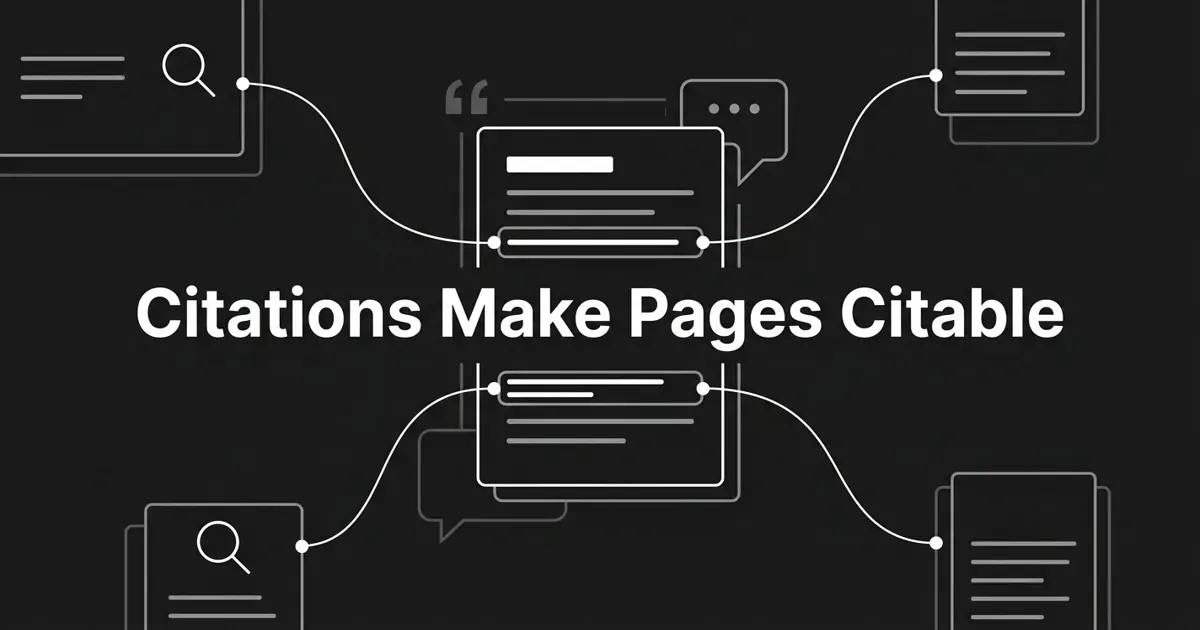
They create liftable units. A specific claim, followed immediately by the source behind it, is a self-contained package. The engine can take it, attribute it, and reuse it without guessing. That package is the thing that gets quoted.
They put you in good company. Linking to authoritative domains places your page near them conceptually. Pages that sit close to trusted sources tend to get treated as more trustworthy themselves.
Notice what's missing from that list. None of it is about passing authority to the other site. It's all about making your own claims legible.
One honest caveat, because you deserve it: the mechanism isn't fully settled. The GEO researchers measured visibility lift, not the model's reasoning. It's possible the "cite sources" effect works partly because citing forces you to write more specific, more quotable claims in the first place. That's still a win. It just means the discipline matters more than the hyperlink.
Do outbound links help AI search on every engine?
Short answer: yes, but not equally, and not for the same reasons.
This is the part most advice skips. The engines don't share a source diet. Analysis comparing citation patterns across the major engines found their cited sources overlap by only a partial margin, somewhere in the range of 16% to 59% depending on the window. Winning in ChatGPT does not hand you Perplexity.
What that means for you, engine by engine:
ChatGPT leans heavily on encyclopedic and established editorial sources, and it pulls a large share of its citations from the early part of a page. Front-load your strongest sourced claims.
Perplexity puts recency and extractability early in its pipeline. It pulls a handful of candidates per query and cites only a few of them. Clean topic sentences and dated, named statistics travel well here.
Claude shows a clear preference for blog-path content over homepages, and it exposes the exact passage it drew from. If a sentence can't be quoted cleanly on its own, it won't be the sentence it picks.
Google AI Overviews overlap substantially with the top organic results, so classic SEO still carries weight. AI Mode behaves differently and pulls heavily from outside the top ten, consulting a wide spread of domains per answer.
Gemini Apps links a source inline when it directly quotes a meaningful block of text from that page.
Feeling like that's a lot to optimize for? It's less than it looks. Every one of those engines rewards the same underlying thing: a specific claim, clearly sourced, cleanly extractable. Do that well and you're eligible everywhere. The per-engine tuning is a second pass, not your first move.
Start with the craft. Tune per engine once you know which engines your buyers actually use.
How many outbound citations, and where they go
Let's get specific, because "cite your sources" is not an instruction anyone can act on.
Density: roughly 4 to 6 editorial citations per 1,500 words. That's the range practitioner benchmarks keep landing on, and it matches what good editorial instinct already tells you. It's a target, not a law. No engine has published an optimum.
Go much past eight per 1,500 words and each one starts carrying less weight. The page stops reading like an argument and starts reading like a bibliography.
Placement beats density every time. Put the source in the same sentence or paragraph as the claim it supports. Relevance gets scored at the passage level, not the page level. A citation eight hundred words away from its claim is functionally unlinked.
Front-load the load-bearing ones. A large share of ChatGPT citations come from the first third of a page. Your strongest claim with your strongest source belongs early, not saved for a big finish.
One source per claim. Two or three links on the same sentence dilute the signal and make the reader wonder which one actually backs it up. Pick the best one. That's an editorial decision, and you're allowed to make it.
If you only change one thing this month, make it placement. Most teams already cite enough. They just cite in the wrong place.
What makes a citation land harder
Citations don't work alone. Two things multiply them.
The first is a specific number. In the same GEO research, adding statistics was the one technique that outperformed citing sources. That makes sense once you see the mechanism. A vague claim with a link attached is still vague. A precise, sourced figure is a finished unit an engine can lift whole. Pair them and you get both halves: something worth quoting, and proof it's real.
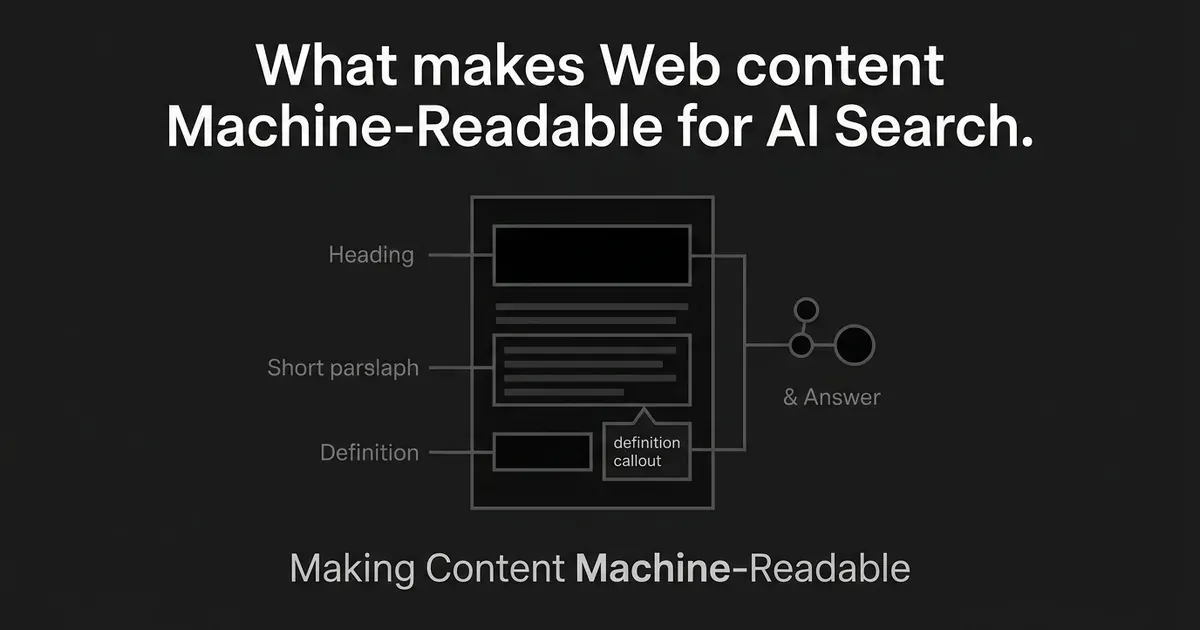
The second is structure. Schema markup doesn't cause citations on its own, but pages carrying both schema and outbound links to authoritative domains show meaningfully better citation rates in AI Overviews than pages with one or neither. The two do different jobs. Schema makes your page machine-readable. Citations make it verifiable. Readable plus verifiable is a much stronger position than either alone.
There's a caveat worth carrying: that schema finding is observational, not a controlled test. Pages that bother with both signals tend to be better pages already. Directionally it holds. Treat it as a reason to do both, not as a promised multiplier.
Which reference sources content teams should trust
Not all sources buy you the same thing. The reference sources content teams reach for by default, whatever ranked first in a search, are usually the weakest option available. Rank them roughly like this instead.
Tier one: government data, academic and peer-reviewed work, standards bodies, regulatory filings, original datasets. Primary, checkable, hard to argue with.
Tier two: established research institutions and analyst firms. Real methodology, known names.
Tier three: company research that discloses its methodology, sample size, and date. Perfectly citable when the disclosure is there. Skippable when it isn't.
Skip: direct competitors, aggregators that just paraphrase a primary source, anything undated or anonymous, and content farms. Engines can read link neighborhoods. Link to junk and you get filed next to it.
One rule of thumb that saves a lot of debate: if a source is summarizing someone else's study, go find the study. The aggregator is a middleman. Citing the original is stronger evidence, it's usually more precise, and it costs you about ninety seconds.
That competitor line deserves a beat. Linking to a rival's page routes both your reader and the retriever toward their positioning. There are moments where transparency is worth it, like an honest comparison page. Just make it a decision, not an accident. Cite the neutral third party instead whenever one exists.
Anchor text: say what's on the other side
Your anchor is a two to five word description of where the link goes. That's it.
Anchor to the substance, not the publisher. "A study of 10,000 queries" tells a reader and an engine what they'll find. "This research" tells them nothing. Neither does "click here" or "read more."
Don't stuff keywords in there either. That's been bad advice for a decade and it hasn't improved.
The authority leak myth, put to rest
Here's the fear underneath the whole debate: link out and you leak authority.
Let it go. Google's own guidance treats editorial links to credible sources as a positive, and it tells you exactly when to reach for a rel attribute. Normal editorial citations need no attribute at all. Use sponsored for paid placements and affiliates, ugc for user-generated content, and nofollow when neither fits but you'd rather not vouch for the destination.
What you should not do is blanket-nofollow every outbound link. That's the old PageRank-hoarding reflex, and it costs you the trust signal without buying anything back. Worth knowing: AI engines don't uniformly respect nofollow anyway. Some treat it as a hint, some ignore it.
You're not spending authority when you cite well. You're demonstrating it.
What kills the lift
Quick list. If your pages do these, fix them before you add a single new citation.
Citation walls. Twenty sources under the conclusion is a bibliography, not evidence. Move them next to their claims.
Generic anchors. "Click here" carries no meaning for anyone, human or machine.
Competitor links by default. You're paying to route the retriever toward them.
Links to content farms. Guilt by association is real here.
Affiliate links dressed as editorial. Mark them sponsored. Engines treat sponsored links as a separate stream that doesn't feed citation lift, and pretending otherwise is a credibility risk, not a shortcut.
Five links to the same domain. It looks like a favor, not like research. Spread your sourcing.
A URL with no claim around it. A bare link isn't a citation. A claim plus its source is a citation.
The Wikipedia round-trip. This one fools a lot of smart people. ChatGPT cites Wikipedia constantly, so teams start linking to Wikipedia hoping it rubs off. It doesn't work that way. Wikipedia's share is ChatGPT pulling Wikipedia. It's not a reward for pages that link there.
None of these are hard to fix. Most are twenty minutes on a page you already published.
The checklist you can hand to a writer
You don't need a new framework. You need something short enough that people actually use it.
- Every non-obvious claim gets a source, in the same paragraph.
- Aim for 4 to 6 editorial citations per 1,500 words.
- Strongest claim and strongest source go in the first third.
- One source per claim. Choose the best, drop the rest.
- Primary sources first. Analyst and company research when it discloses methodology.
- No competitor links unless you've decided the transparency is worth it.
- Anchors: two to five words describing what's on the other side.
- No rel attribute on editorial citations.
sponsoredandugcwhere they genuinely apply. - Undated or anonymous source? Don't cite it.
- No reference dump at the bottom. If it matters, it goes inline.
That's the whole discipline. Ten lines, no tooling required.
Here's the part that's harder than the rules: doing it on every piece, every week, when you're already behind. Citation discipline isn't hard to understand. It's hard to sustain. That's usually where it quietly dies, somewhere around the fourth article of a busy month.
Which is worth naming honestly, because a checklist that lives in a doc nobody opens isn't a system. The teams that win this don't have better rules. They have the rules built into how drafts get made, so sourcing isn't a step someone remembers at the end. That's the thinking behind how DeepSmith approaches production: research, sourcing, and citation-ready structure happen during writing, not in a cleanup pass after. If your citation standards keep slipping under volume, it's worth starting a free trial and seeing what it looks like when they don't.
Either way, keep the checklist. It works whether or not you ever automate it.
Where this leaves you
Citing sources helps AI engines cite you back. That's the answer, and the evidence supports it.
The nuance is that a link isn't the lever. Verifiability is. Your outbound sources work when they sit beside a specific claim and let anyone, human or model, check the work. They do nothing when they pile up at the bottom of the page.
One more thing worth setting expectations on: this is a long-arc play. Citation positions are sticky, and the majority of cited domains see no week-over-week movement at all. You're not flipping a switch. You're compounding a standard across a portfolio, and that takes months, not days.
So don't try to fix the whole site. Take your five most important pages. Move the citations next to their claims, front-load your best source, fix the anchors. That's an afternoon.
Then apply the checklist to the next thing you publish. That's how this becomes real. One page at a time, and you're closer than you think.