Profound writes and publishes content from its visibility data, using agents and CMS connections, with an approval step before anything goes live. Bluefish measures AI visibility and generates page-level tactics, but your team writes and publishes the pages. Profound suits teams that want the whole loop inside an enterprise package, and Bluefish suits large brands that want direction plus a strategy service. DeepSmith tracks and writes publish-ready articles from a fixed monthly allowance at public prices.
When your tracking shows a gap, the next step is a page that fills it, and that step is where these two tools differ most. This page covers Profound vs Bluefish for content creation, and only for that one job, which is getting from a visibility gap to a live article. Profound has agents that draft and publish. Bluefish tells your team what to change and then measures the result. The full comparison of the two is in Profound vs Bluefish: Do You Need Content Agents or a Managed Strategy Team?, so this page stays on the content question.
Profound vs Bluefish: the short answer
- Choose DeepSmith if you want one self-serve plan that tracks AI visibility and produces publish-ready articles, starting at $99 a month for 20 articles with a 7-day free trial.
- Choose Profound if you are an enterprise or mid-market team that wants agents to draft and publish from deep visibility data, and you can buy through a custom, credit-based package.
- Choose Bluefish if you are a large brand that wants prioritized tactics, tactic-level measurement and a strategy team, and your own writers will produce the content.
| Criterion | DeepSmith | Profound | Bluefish |
|---|---|---|---|
| Entry price (monthly) | $99/mo (Pro) | Custom quote (Enterprise) | Not listed |
| Free trial | Yes, 7 days | Yes, 7 days | No |
| Citation tracking | Yes | Yes | Yes |
| Recommendations from visibility data | Yes | Yes | Yes |
| Content generation | Yes | Yes, drafts with an approval step | No |
| Brand-context grounding | Yes | Yes | Yes |
| CMS publishing | Yes | Yes | Not listed |
| Content repurposing | Yes | Yes | Not listed |
| G2 rating | 4.8/5 | 4.5/5 | No G2 rating |
Pricing and features as of September 2026, from each vendor's site and public reviews.
Profound

Profound is an AI marketing platform that tracks how ChatGPT, Google AI Overviews, Gemini, Perplexity, Claude and other engines mention and cite a brand, then uses agents to act on that data. For this job the relevant parts are its Agents and its Context Manager. Agent templates such as Research-to-article and Net-New Content Creation draft full articles grounded in brand kits and citation data, and CMS nodes can publish approved drafts to WordPress, Sanity, Contentful, Webflow and others. It announced a $180 million Series D in September 2026. It is built for enterprise and mid-market marketing teams and for agencies.
The limits are about cost and access. Paid pricing is not public, agent runs use credits, and the free Trial lasts seven days on three engines. Profound describes its output as drafts ready for human review, with an approval step before publishing. On G2 it is rated 4.5/5 from 1,130 reviews as of September 2026, TrustRadius shows 8.5/10 from 13 reviews, and reviewers often call it expensive.
Bluefish

Bluefish is a sales-led enterprise platform that tracks how AI assistants and Amazon's shopping assistants describe a brand, generates optimization tactics, and measures which actions moved the numbers. Its Agentic Campaigns feature takes a goal, such as more visibility or better accuracy, and produces page-specific tactics that marketers carry out. A Brand Vault holds first-party facts, and its content tools produce briefs.
It does not write full articles, and no CMS connector is named in its record. Its site says "Bluefish provides the direction. You stay the author." It targets Fortune 500 brands with several teams to coordinate, and most customers also buy strategy services. There is no public pricing and no self-serve signup, and its G2 listing had no reviews when checked in September 2026.
DeepSmith: the alternative that writes and publishes at public prices

Bluefish leaves the writing and publishing to your team. Profound does the work, and it does so through a custom contract, credits that are hard to forecast, and an approval step on each run. DeepSmith closes the same gap on simpler terms. Opportunity Agents read your AI visibility data and return content ideas, and each idea carries the data point that justifies it. Ideas collect in New Ideas, get a date in Planned Content, and the Writer turns each one into a finished article that is researched, linked internally and externally, and set up with a cover image and publish-ready metadata. Deep IQ keeps your brand context, so every article is grounded in your voice and your real products.
Autowrite can run that step on a schedule with no one in the app, and Produced Content publishes to WordPress, Webflow, Strapi, Sanity or Contentful, or to your own webhooks. Every article also arrives with social posts already written, and the Apps Library adapts it for LinkedIn, X, newsletters and more.
The cost is on the pricing page. Pro is $99 a month ($80 billed annually) with 20 articles, 50 tracked prompts and ChatGPT. Grow is $199 ($160 annually) with 40 articles and adds Perplexity, and Scale is $399 ($299 annually) with 90 articles and adds Gemini. Enterprise is custom and covers all ten engines. There is a 7-day free trial and no long-term contract.


From insight to action
Profound and Bluefish tie on turning visibility data into recommendations, since both records show it as a capability. Profound surfaces opportunities and prioritized actions, and its content agents research what engines cite for a topic before drafting. Bluefish ranks optimizations by impact with an owning team, and Agentic Campaigns track the effect of each tactic against a fixed prompt baseline. That tracking is a real strength, because it shows whether a change held or faded.
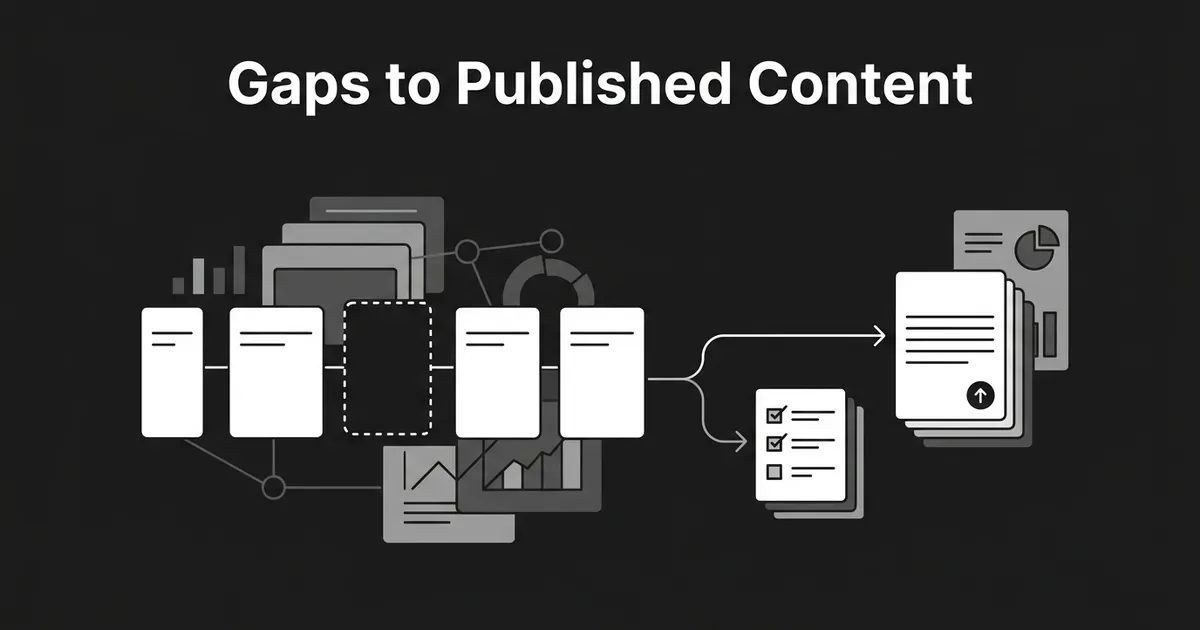
The difference for Profound vs Bluefish content creation from AI visibility gaps comes after the recommendation. With Profound, the recommendation can hand off to an agent that drafts the page. With Bluefish, it hands off to your team's backlog.
What DeepSmith does: Tracking and production run on the same data in one platform. A gap you see in AI Visibility becomes an Opportunity Agent idea with its evidence attached, and that idea moves to a planned date and a written article without leaving the workspace. You review for strategy and judgment, and you skip rebuilding the brief.
Writing and brand grounding
Profound is the clear winner on writing, because Bluefish does not write full articles. Profound's agents draft from citation data and Brand Kits, and its Context Manager pulls brand records from your files, Slack, email and Gong conversations. Bluefish also grounds its tactics in a stored source of brand facts, but the output is a brief or a tactic, and the author is you. If you are weighing Profound or Bluefish for content creation, this is the axis that settles most of the question.
Profound frames what its agents produce as drafts for human review. It also claims publish-ready content in minutes, so the amount of editing you will do is something to test in the trial.
What DeepSmith does: The Writer produces an article that is meant to be published, not rescued. It follows your stored persona, voice and content type, hits your word range and link targets, and adds the cover image and metadata. Every run can be checked against those inputs afterward.
Publishing and repurposing
Profound wins this axis too. Its CMS nodes publish to WordPress, Sanity, Contentful, Webflow, Framer, Payload, Drupal, Directus, Basehub and Adobe Experience Manager, and templates cover translation and turning a video into a blog post. The caveat is the approval step, and the record notes it is unclear whether review is mandatory or something you add with a Human Review Node. For Bluefish, no CMS connector is named and repurposing is not listed, so published pages are produced and uploaded by your team.
What DeepSmith does: Publishing is one action in Produced Content, or hands-off through Autowrite. Social posts are written with every article, and the Apps Library makes platform-native versions for the channels you use.
Pricing and access
Neither vendor publishes a price for the plans that do this work. Profound has a self-serve Trial, free for seven days with 50 prompts, three engines and limited credits, and then a custom Enterprise package where agent use consumes credits. Bluefish has no trial and no signup, and every path starts with a demo request and a negotiated order form. In a Profound vs Bluefish for content creation decision, access matters as much as features. Profound is easier to test, and on price, neither one lets you plan a budget before a sales call.
What DeepSmith does: The plans are public, and each one states how many articles you get a month. You can start the free trial yourself and see the cost of a month of articles before you speak to anyone.
Which should you choose
- DeepSmith fits content and marketing teams, and agencies, that want to track AI visibility and publish the content that closes the gaps from one self-serve plan, with a known number of articles each month.
- Profound fits enterprise and mid-market teams that want agents to draft and publish from deep analytics and are comfortable with a sales-led, credit-based package.
- Bluefish fits Fortune 500 style brands with several marketing teams, an in-house content group and a wish for a managed strategy service alongside the software.
Start your DeepSmith trial at app.deepsmith.ai and see how a visibility gap becomes a finished article.