You searched your core use case in ChatGPT last week, and a competitor's URL showed up as the source instead of yours. That stings. It also tells you exactly what to fix, if you have the right tool watching. The best AI citation tracking tools do one specific job: they show you which URLs and domains AI engines hand people as sources, so you stop guessing and start closing the gap.
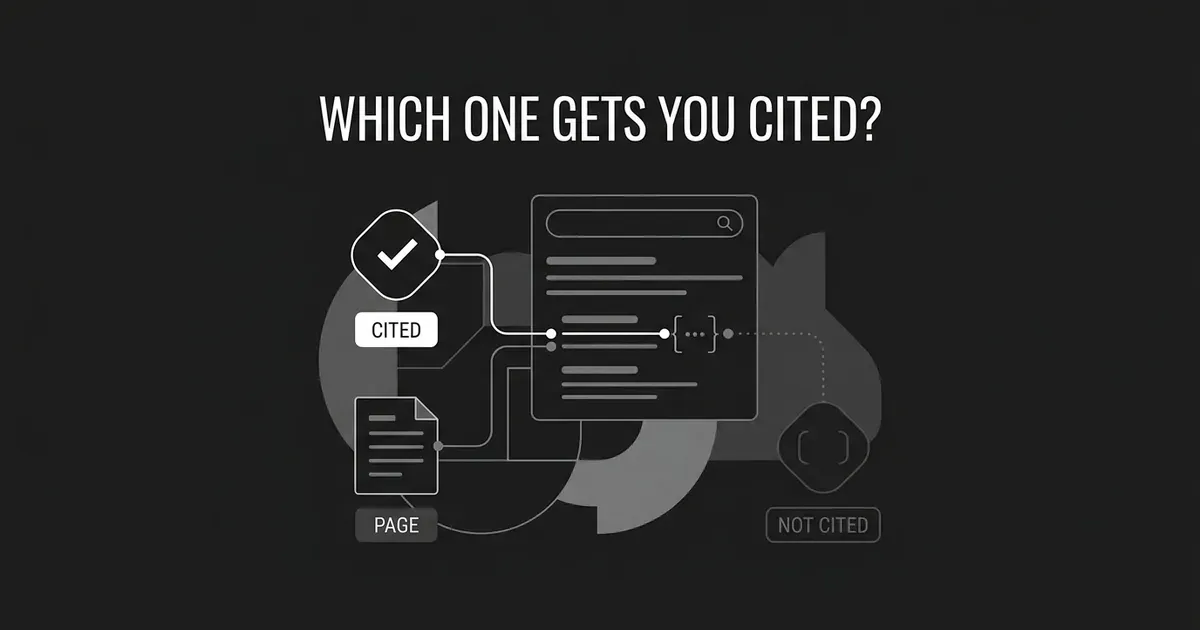
Here is the thing most buyers get wrong, and it is an easy fix. A mention is not a citation. A mention is your brand name appearing in an AI answer as prose ("Acme is a popular CRM"). A citation is a clickable source URL the engine points to. They are two different metrics on the same answer, and a tool that only counts mentions will flatter your numbers while hiding the truth. When you shop for llm citation tracking, you want the citation view: which page won, on which engine.
This guide ranks eleven tools that actually track ai citations at the URL level, plus a few honorable mentions worth a spot check. If you have been searching for a citation tracker for ai search that shows real source URLs, this is your shortlist. Let's find the one that fits how you work.
How we ranked these tools
Before the list, here is the scorecard we used to grade every llm citation tracking tool, so the ranking is something you can argue with rather than trust blindly. Six criteria, in priority order:
- Citation-level visibility. Does it report the exact URLs cited, not just brand names, with per-prompt and per-page breakdowns?
- Engine coverage. How many major answer engines does it track (ChatGPT, Perplexity, Gemini, Claude, Google AI Mode, Google AI Overviews), and how fresh is the data?
- Citation gap-finding. Can you see which prompts a competitor page is winning, with the specific competitor URLs called out, so you know what to write against?
- Production handoff. Does the tool stop at a dashboard, or feed the gap straight into a pipeline that produces the closing article?
- Pricing transparency. Published plans with real numbers, not a "contact us" gate on every tier.
- Fit for marketing teams. Multi-seat workspaces, brand context stored once, collection that runs on a schedule.
Keep one thing in mind as you read: a tracker-only tool is often the right start for a pilot, while a platform that includes production fits once you have decided the citation program is permanent.
Comparison table at a glance
| Rank | Tool | Starting price | Engines tracked (per vendor) | URL-level citations | Gap visibility | Production handoff | Free trial |
|---|---|---|---|---|---|---|---|
| 1 | DeepSmith | $99/mo ($80 annual) | 10 engines incl. ChatGPT, Gemini, Perplexity, Claude, AI Overviews, AI Mode, Copilot, Grok, Meta AI, DeepSeek (Pro tracks ChatGPT; all 10 on Enterprise) | Yes | Yes | Native | 7-day, no card |
| 2 | Profound | $99/mo Brand Starter | ChatGPT, Perplexity, Claude, Gemini, Copilot, Grok, Meta AI, DeepSeek, AI Overviews | Yes | Yes | Partial (Agents) | By demo |
| 3 | Otterly AI | $29/mo Lite | ChatGPT, AI Overviews, Perplexity, Copilot; Claude, AI Mode, Gemini as add-ons | Yes | Partial | None | App sign-up |
| 4 | Peec AI | $95/mo Starter | ChatGPT, Perplexity, Gemini (more on Enterprise) | Yes | Yes | None | App sign-up |
| 5 | Ahrefs Brand Radar | $129/mo base plus add-on | 6+ indexes incl. AI Overviews, ChatGPT, Perplexity | Yes | Yes | None | Free checker |
| 6 | Semrush AI Visibility | $99/mo per domain | Google AI Mode, ChatGPT (more in Semrush One) | Yes | Partial | None | No trial |
| 7 | SE Ranking AI Search | $129/mo annual | AI Overviews, AI Mode, ChatGPT, Gemini, Perplexity | Partial | Partial | None | 14-day, no card |
| 8 | Surfer AI Tracker | $182/mo Pro annual | Gemini, AI Overviews, AI Mode, ChatGPT, Perplexity | Yes | Partial | Yes (Surfer editor) | Via Surfer base |
| 9 | AirOps | Free Insights tier | ChatGPT, Perplexity, Gemini, Claude, Google | Yes | Yes | Yes (agents) | Yes (free) |
| 10 | LLMrefs | $79/mo | 9 engines incl. ChatGPT, AI Overviews, Gemini, Perplexity, Claude, Grok | Yes | Partial | None | App sign-up |
| 11 | AthenaHQ | Not published | 8+ LLMs incl. ChatGPT, Claude, Perplexity, Gemini | Yes | Yes | Yes (agents) | Free 10-min audit |
The table does the heavy comparing. The entries below tell you why each tool sits where it does, and where each one is genuinely the better pick.
1. DeepSmith

Best for: content and marketing teams (and agencies) who want to track which URLs AI cites and close the gaps with publish-ready, on-brand content, in one place, without bolting a separate writing tool onto the workflow.
Most tools in this list stop when they have shown you the gap. DeepSmith keeps going. It is one platform with seven connected modules wired together by a shared brand context, so the citation data you collect on Monday can become the article that wins the citation by Friday.
Start with the tracking. The AEO module tracks mention rate and citation rate across ten engines: ChatGPT, Gemini, Perplexity, Claude, Google AI Overviews, Google AI Mode, Grok, Meta AI, Microsoft Copilot, and DeepSeek, with coverage rising by plan tier. The Prompts view reports citation rate per prompt with full answer history, so one bad week does not mislead you. The Pages view shows which of your pages AI is actually citing and each page's share of your total citations, so you see which sources AI cites for a prompt and exactly which page the citations land on.

For gap-finding, Competitor Citations reports who wins citations for your tracked prompts, on which exact competitor pages, and how each rival performs per engine. Content Map turns your site and your competitors' sites into one topic map, so coverage gaps and untapped topics are a measurement rather than a hunch, and Opportunity Agents read that data and return ideas with the justifying data point attached, straight into New Ideas. The gap becomes a named URL you can write against.
Then the part no pure tracker offers. The Writer turns a planned idea into a finished, brand-grounded article with internal links, schema metadata, a cover image, and outbound citations, all pulled from your Deep IQ context (product facts, brand voice, persona, content types). Autowrite runs it on a schedule and lands the piece in Produced Content with no one in the app, and Repurpose plus the Apps Library turn it into LinkedIn, X, and newsletter versions in your voice. Tracking, gap-finding, production, distribution: one loop.

Key features: per-prompt and per-page citation tracking; Competitor Citations with page-level attribution; native production via The Writer and Autowrite; brand context stored once in Deep IQ; multi-workspace for agencies. Pricing is transparent: Pro $99/mo ($80 annual), Grow $199/mo ($160 annual), Scale $399/mo ($299 annual), plus custom Enterprise. Coverage rises by tier: Pro tracks ChatGPT, Grow adds Perplexity, Scale adds Gemini, Enterprise and Custom cover all ten. A 7-day free trial gives you real data and real drafts before you pay, with no long-term contract.
One honest limitation: DeepSmith is a full platform, not a lightweight dashboard. If you only want a tracker and already have a content operation you trust, you will pay for modules you may not use at first. If you truly want a read-only dashboard and nothing else, a cheaper pure monitor below will suit you, and that is a fair call. But the moment you want the tracking and the page that closes the gap in one place, Pro at $99/mo is the clean entry, and the value compounds with every citation gap you turn into a published page.
2. Profound

Best for: enterprise and mid-market teams building an end-to-end AEO program who want broad engine coverage paired with AI crawler analytics and are comfortable buying into a single closed-loop vendor.
Profound is a heavyweight on engine breadth. It tracks Perplexity, ChatGPT, Claude, Gemini, Grok, Microsoft Copilot, Meta AI, DeepSeek, and Google AI Overviews, and its Answer Engine Insights break out cited domains and cited pages across all of them. A standout is Agent Analytics, which tracks which AI bots (GPTBot, ClaudeBot, and others) actually crawl your pages, so you can pair a citation number with a real crawler signal. A large real-user prompt dataset also feeds genuine demand data into your calendar.
Key features: a broad published engine list; cited domains and cited pages reporting; AI bot crawler analytics; competitor benchmarks; Profound Agents for in-platform execution. Published pricing runs $99/mo Brand Starter and $399/mo Brand Growth, with custom Enterprise and layered agency add-ons.
One honest limitation: Brand Starter is restrictive (one engine, one region, one seat), and the citation-plus-production story leans on Profound Agents rather than a full editorial pipeline. If you want tight control over production in your own stack, or a cheap tracker-only commitment, the entry tier will feel tight.
3. Otterly AI

Best for: solo marketers, small in-house teams, and agencies who want the cheapest published entry into link-level citation tracking.
At $29/mo for the Lite plan, Otterly is the friendliest price in the category, and it does not skip the part that matters. Its Link Citations Analysis surfaces the actual URLs AI uses as backing sources across your prompts, and Domain Ranking positions your domain against competitors inside the AI citation layer. A Prompt Research tool turns your SEO keywords into AI-style prompts, a nice on-ramp from a traditional SEO workflow. Every non-Enterprise plan includes unlimited seats, which is rare at this price.
Key features: link-level citation analysis; GEO URL audits; prompt research from keywords; unlimited seats. Lite is $29/mo (15 prompts, 4 engines), Standard $189/mo (100 prompts), Premium $489/mo (400 prompts), plus custom Enterprise.
One honest limitation: Lite caps you at 15 prompts and four engines, which is too small for a real program, and Claude, Google AI Mode, and Gemini are add-ons rather than included. There is no content production handoff, so the article that closes the gap gets written somewhere else.
4. Peec AI

Best for: marketing teams and agencies who want the cleanest distinction between "used" and "cited," refreshed daily, with deep competitor source analysis.
Peec earns its spot on a point most tools blur. It separates "used" (your content informed the answer) from "cited" (your URL is actually in the answer), and shows source usage at both the URL and domain level. That distinction keeps you honest about where you really stand. Tracking runs daily across ChatGPT, AI Mode, Google AI Overviews, Copilot, Perplexity, and Gemini, with more engines on Enterprise. Source gap analysis is the explicit use case Peec builds around, so finding a competitor's winning source is a first-class workflow, not a buried report.
Key features: used-vs-cited split on every page; daily refresh; competitor source gap analysis; unlimited users on Starter. Pricing is $95/mo Starter and $245/mo Pro, with Advanced and custom Enterprise above.
One honest limitation: Peec stops at the dashboard. There is no native production, so you pair it with your content stack to actually publish the closing page.
5. Ahrefs Brand Radar

Best for: SEO teams already living in Ahrefs who want the largest published prompt catalog layered on a toolset they already know, plus free spot checks.
If Ahrefs is already your SEO home, Brand Radar is the natural add-on. Its Cited domains and Cited pages reports identify exactly which URLs AI cites as sources, and the Overview tab compares you against competitors with Only brand, With others, and Others only views. That last one is your gap: prompts where competitors appear and you do not. The prompt catalog is the biggest published in the category, and the free AI Visibility Checker runs a spot check with no signup.
Key features: cited domains and cited pages reports; competitor gap views; huge prompt catalog; free checker. Standalone starts at $199/mo for one AI index and runs to $699/mo for all six; it can also attach to a base Ahrefs plan starting at $129/mo.
One honest limitation: the tracker lives apart from any production workflow, so Ahrefs will name the cited URL but never draft the reply. Full six-engine coverage at $699/mo is steep if Brand Radar is your first Ahrefs purchase rather than an add-on.
6. Semrush AI Visibility Toolkit

Best for: existing Semrush subscribers, or single-domain buyers, who want AI visibility folded into the keyword workflow they already pay for.
At $99/mo per domain standalone, the Semrush toolkit brings citation tracking into a research environment millions of marketers already use: Brand Performance analysis, Prompt Tracking with citations, an AI Visibility Score, competitor monitoring, and optimization tips, all beside your keyword data.
Key features: citation tracking in Prompt Tracking; AI Visibility Score; competitor monitoring; Site Audit AI checks. Standalone is $99/mo per domain; broader engine coverage comes through the Semrush One bundle.
One honest limitation: standalone only covers Google AI Mode and ChatGPT, so Perplexity and Gemini require the bundle. Pricing scales per domain and per prompt block, so a multi-product brand should budget for add-ons.
7. SE Ranking AI Search Toolkit

Best for: SEO teams and consultants already using SE Ranking for rank tracking who want to add AI visibility without switching platforms.
SE Ranking bundles AI visibility into a familiar SEO suite at $129/mo annual, tracking brand mentions and links in AI answers across Google AI Overviews, AI Mode, ChatGPT, Gemini, and Perplexity. GEO competitor research covers up to five domains per project, and generous API credits plus MCP access make it a cheap route into programmatic AI visibility data. A 14-day free trial with no card lets you test first.
Key features: mentions and links across five engines; GEO competitor research; API and MCP access; free 5-check tool. Core is $129/mo annual, with higher tiers as add-on capacity.
One honest limitation: citation tracking is bundled into a broader SEO platform rather than a dedicated deep tracker, and several reviewers note the AI data can lag the live engine, with ChatGPT coverage reading thinner than tools built purely for LLM tracking.
8. Surfer AI Tracker

Best for: content teams already running Surfer's on-page optimization who want a dedicated AI tracker that bundles with a content editor they already use.
Surfer's AI Tracker adds per-prompt mention and citation tracking with a daily refresh across Gemini, Google AI Overviews, Google AI Mode, ChatGPT, and Perplexity. The real advantage shows up if you already run Surfer: spot a gap, then open the Surfer content editor to produce the page that closes it, without leaving the tool.
Key features: daily per-prompt tracking across five engines; tight integration with Surfer's content editor. Pro is $182/mo annual (50 prompts) and Peace of Mind is $299/mo annual (100 prompts), on top of the Surfer base.
One honest limitation: it is strongest only when you already pay for Surfer. If you do not, $182-plus a month for 50 prompts is hard to justify against tracker-only peers, and the prompt caps are tighter than similarly priced rivals.
9. AirOps

Best for: growth and content teams who want both a citation dashboard and hands-on agents to fix the gaps, with a free tier to start.
AirOps pairs tracking with execution. Its dedicated Citations page aggregates the URLs cited across AI responses for your tracked prompts and flags offsite pages where you could be cited but are not. AirOps agents then drive content refresh, creation, and social posts against those gaps. Tracking spans ChatGPT, Perplexity, Gemini, Claude, and Google, and a free Insights tier lets you try it before paying.
Key features: dedicated Citations page; offsite opportunity detection; content and refresh agents; free Insights tier. Solo runs about $199/mo and Pro about $1,999/mo, with custom Pages and Enterprise plans.
One honest limitation: Pro at roughly $1,999/mo is far above the other entry points here, and the free Insights tier caps tracked prompts at 100, fine for spot checks but light for a category-level program.
10. LLMrefs

Best for: teams who want the cheapest published multi-engine plan with broad coverage and do not need a production handoff.
LLMrefs offers a single all-in-one plan at $79/mo with 500 prompts, unlimited seats, and the widest engine list at this price: ChatGPT, AI Overviews, AI Mode, Gemini, Perplexity, Claude, Microsoft Copilot, Meta AI, and Grok. Handy extras include an AI crawlability checker and an LLMs.txt generator.
Key features: nine engines on one flat plan; citation tracking; geotargeting across 50-plus countries; CSV export and API. One plan, $79/mo, 500 prompts.
One honest limitation: the weekly refresh cadence is slower than daily trackers, and there is no native content layer, so closing the gaps means pairing it with a separate content pipeline.
11. AthenaHQ

Best for: brands that want a fast audit path and AI agents to act on citation signals, especially in regulated industries with a compliance bar.
AthenaHQ opens with a free 10-minute audit and tracks AI visibility across 8-plus LLMs including ChatGPT, Claude, Perplexity, and Gemini, with citation intelligence and agent-backed recommendations. Its differentiator is compliance: SOC 2 Type II and HIPAA certification fit regulated teams that other tools cannot serve.
Key features: free 10-minute audit; citation intelligence across 8-plus LLMs; action agents; SOC 2 and HIPAA compliance.
One honest limitation: pricing is not published past the free audit, so scoping an evaluation is harder, and the actual workspace is paywalled behind that funnel.
A few honorable mentions
You will run into these while shopping, so here is where they fit. Writesonic tracks 11-plus engines with citations and sentiment, tied to its SEO writing suite. Botify AI Visibility is an enterprise module inside Botify, strong if you already run it for technical SEO (pricing not published). Authoritas is one of the original AI brand trackers, with a free single-model check. Scalenut and Rankability attach citation tracking to GEO execution platforms. And Geoptie, Rankscale, and MyBrandi are free or low-cost single-prompt checkers, handy for a one-off diagnostic but not for program-level tracking.
How to choose the right one for you
Feeling a little buried by eleven options? Take a breath. The right pick comes down to what you are actually trying to do, and there are only a few real situations.
You need citation tracking and the article that closes the gap, in one place. Pick DeepSmith. The Writer and Autowrite turn citation-gap signals into publish-ready pages without a handoff, and Repurpose ships distribution in the same loop. For a tracker-only start, Pro at $99/mo is a fair floor.
You are building an enterprise AEO program and need coverage across every major engine. DeepSmith Enterprise tracks all ten, Copilot, Grok, Meta AI, DeepSeek and AI Overviews included, with the production loop attached. Pick Profound instead if AI bot crawler analytics are the deciding signal, or AthenaHQ if SOC 2 and HIPAA are non-negotiable.
You want the cheapest entry with real citation-level visibility and do not need an in-platform writer. Pick Otterly AI Lite at $29/mo, or Peec AI Starter at $95/mo if you want the used-vs-cited split and daily refresh.
You already pay for an SEO suite. Add Ahrefs Brand Radar if you live in Ahrefs, or the Semrush AI Visibility Toolkit at $99/mo if you live in Semrush. SE Ranking fits if that is your rank tracker.
You want tracking plus workflow agents. Pick AirOps, especially at Pro for the multi-engine insights and content agents.
You just want a free spot check before buying anything. Run Ahrefs's free checker, AirOps Insights, or the AthenaHQ audit. Just remember a spot check is not a program.
Most teams start with a tracker-only pilot and, once the program proves itself, migrate to a platform that can both track ai citations and produce the pages that win them. There is no wrong first step. Pick the tool that matches this quarter, and let the results tell you when to level up.
Start with one prompt
You do not need to track everything on day one. You need to see which sources AI cites for the handful of prompts your buyers actually ask. Pick a tool from this list, load five prompts, and watch where the citations land for a couple of weeks. That single view will tell you more than a month of screenshots. If you want the tracking and the fix in one place, start a DeepSmith trial and turn your first citation gap into a published page this week. Momentum matters more than perfection. Start there.